

I Clean My Lint Trap After Every Load. Why Are My Clothes Still Taking Longer to Dry?
If you clean your dryer’s lint trap after every load, keep doing it. But if the same load of towels used to dry in one cycle and now needs two, the next place I’d look is where the dryer vents outside.
Your dryer can look exactly the same as the day it was installed. The drum still turns, the clothes still get warm, and the lint screen comes out clean after you’ve emptied it. Meanwhile, lint can be building up in the duct behind the dryer, inside a wall or ceiling, or right at the outside vent cap.
A clean lint trap tells you about one part of the system
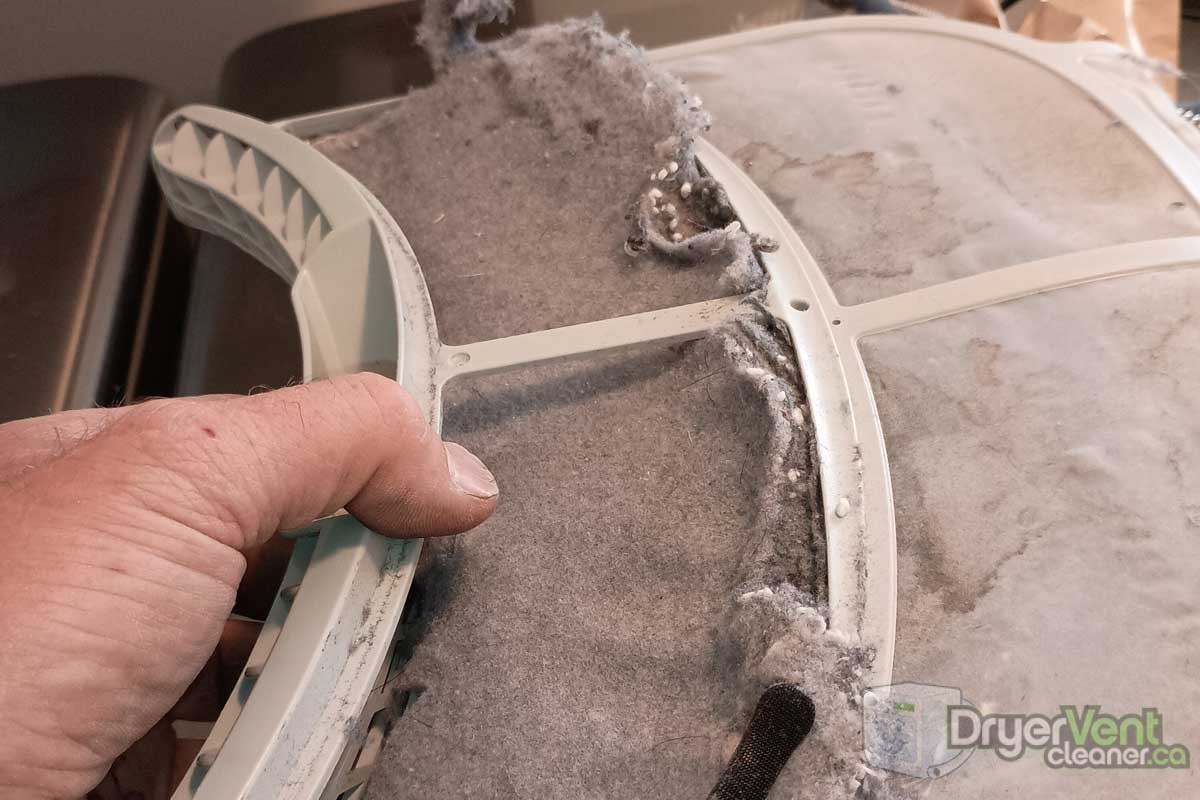
The lint screen catches fibers as air leaves the dryer drum. Some fine lint gets through the screen and travels into the exhaust duct. Some of it makes it outside, and some can collect along the way, especially around bends or at the vent cap.
Your dryer needs airflow to carry moisture out of the house. When the duct or cap becomes restricted, that damp air has a harder time getting out. That’s why your towels can come out warm and still damp, even though you cleaned the lint screen before you started.
Check the outside vent while the dryer is running
If you can safely reach the outside vent from ground level, turn the dryer on and take a look.
- Are the flaps opening? If your cap has flaps, they should open when the dryer is exhausting air.
- Can you feel a steady flow of air? Hold your hand near the outlet. If you can barely feel any air, or the flaps only open a little, the vent is worth checking.
- Can you see lint packed around the opening? Buildup at the cap can restrict airflow, and there may be more lint farther back in the duct.
This is a quick check. If airflow is weak, the restriction could be at the cap, farther along the duct, or even in a crushed connection behind the dryer.
What if your dryer vents through the roof?
If you can’t find a dryer vent cap on an outside wall, it may be on the roof. Leave the roof inspection to a professional.
On roof vent jobs, one problem we see is a cap fitted with a mesh screen. Fine lint catches on the mesh, and over time it can form a mat across the opening. We’ve seen some of these caps become badly restricted in as little as two or three years. If the same cap keeps plugging up after cleaning, it’s worth checking whether it was designed for dryer exhaust in the first place.
Check the airflow before replacing the dryer
When the dryer still heats but familiar loads take longer and longer, I’d check the vent before spending money on a new machine. A new dryer connected to the same restricted duct can have the same problem. If airflow checks out, you can move on to troubleshooting the appliance.
At Dryer Vent Cleaner, we check airflow before and after cleaning so you can see the difference. If your clothes are taking longer to dry, or you’re unsure where your dryer vents, we can inspect the duct and outside cap. We service wall and roof dryer vents across Niagara and Hamilton.